Global Experts Convene at HKUST for International Electrochemistry Summit 2025
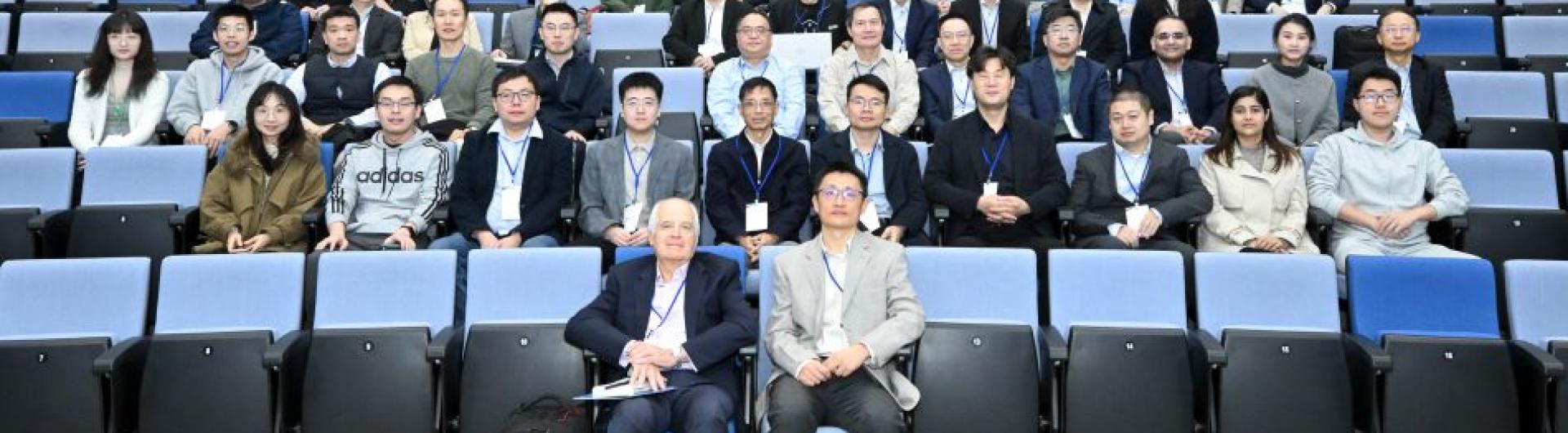
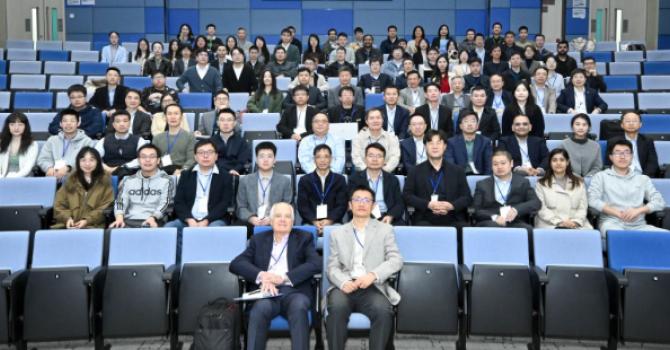
The Hong Kong University of Science and Technology (HKUST) successfully concluded the International Electrochemistry Summit 2025 (IES 2025) from December 27 to 30. This landmark event, held as part of HKUST’s 35th Anniversary (35A) celebrations, brought together over 40 distinguished speakers from the Chinese Mainland, the United States, Europe, South Korea, and Hong Kong SAR, alongside more than 50 participants from across the global electrochemical research community.
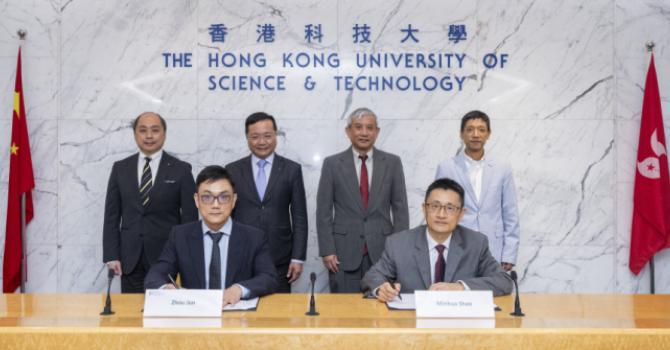
Conference Chair Professor Minhua Shao—Cheong Ying Chan Professor of Energy Engineering and Environment, Head and Chair Professor of Chemical and Biological Engineering, Director of the HKUST Energy Institute, and Director of the CIAC-HKUST Joint Laboratory for Hydrogen Energy—opened the summit. He was joined in welcoming attendees by Professor Zidong Wei, Deputy Director of the Chinese Society of Electrochemistry. Together, they emphasized the summit’s goal of establishing an annual, premier international platform at HKUST to advance scientific discovery in electrochemistry and strength Hong Kong’s role as a global hub for academic and technological exchange.
Over the four-day program, participants engaged with a robust agenda featuring 8 plenary talks, 34 invited talks, and a dedicated panel discussion, gaining comprehensive insights into cutting-edge advancements in batteries, electrocatalysis, and fundamental electrochemical science. The summit featured a prestigious roster of plenary speakers, including Prof. Yi Cui (Stanford University), Prof. Yu Huang (University of California Los Angeles), Prof. Alexei Kornyshev (Imperial College London), Prof. Shi-Gang Sun (Xiamen University), Prof. Andy Xueliang Sun (Western University/The Eastern Institute of Technology, Ningbo), Prof. Zhong-Qun Tian (Xiamen University), Prof. Kang Xu (SES AI Corporation), and Prof. Peidong Yang (University of California, Berkeley). They were complemented by a diverse group of invited speakers, whose presentations covered specialized, cutting-edge topics across the field of electrochemistry. Together, they provided a comprehensive and multi-faceted overview of the field’s most pressing challenges and exciting frontiers.
Discussions spanned a wide range of topics, from fundamental theory and novel energy materials to advanced operando characterization techniques and the study of electrochemical interfaces under real operational conditions. The growing integration of artificial intelligence into electrochemical research was also highlighted. During the panel discussion, six experts provided targeted advice for junior researchers and debated AI’s transformative potential in the field. Prof. Zhong-Qun Tian stressed the critical balance between investigating core mechanisms and developing practical applications. On AI, Prof. Yi Cui noted it would augment, not replace, human researchers, advocating for future development of specialized, domain-specific AI models over generic ones.
The organizing committee gratefully acknowledges the strong support and generous sponsorship of the HKUST School of Engineering, Department of Chemical and Biological Engineering, the International Society of Electrochemistry, The Electrochemical Society, the Chinese Society of Electrochemistry, and industry partners including NeWare Technology Limited and Shenzhen Kejing Star Technology.